Running a local business in 2025 is tougher than ever. You might have the best product or service in town, but if your business doesn’t show up when people search “near me,” you’re practically invisible. That’s the pain many small business owners face: lost customers simply because competitors rank higher on Google Maps and local search results.
The good news? You may correct it with the appropriate local SEO approach. You may outperform rivals and be seen by clients just when they’re ready to make a purchase by optimizing your Google Business Profile, maintaining consistency in your company’s information throughout the web, generating citations, and receiving reviews.
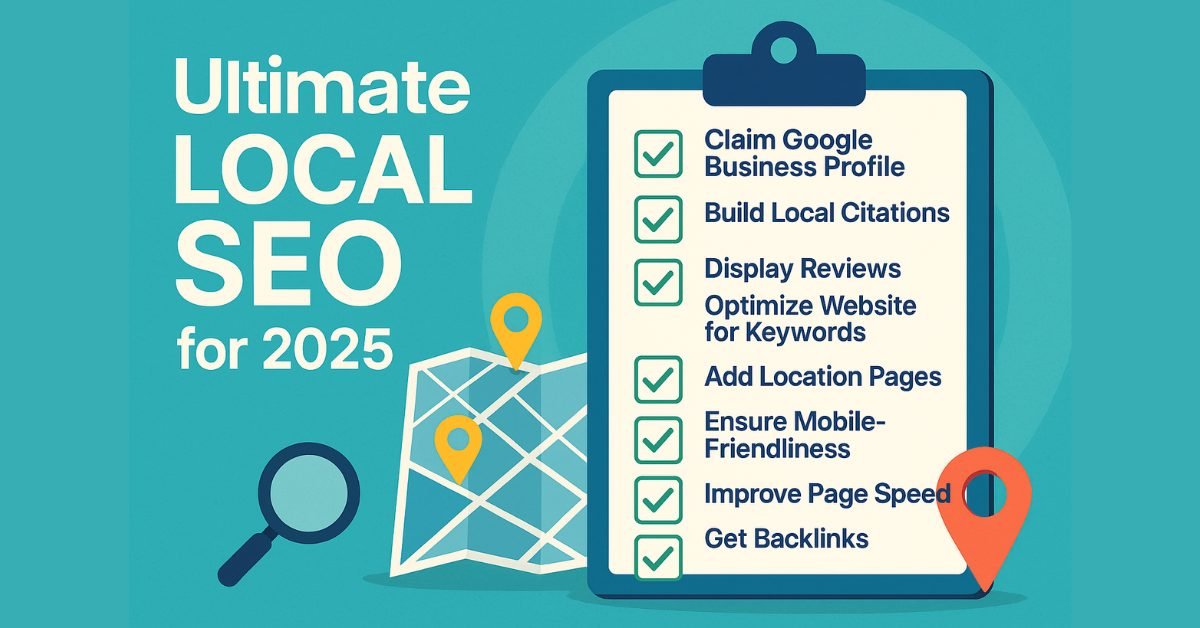
Let’s take you through a detailed Local SEO checklist for 2025 that includes backlinks, reviews, tracking tools, NAP consistency, GBP optimization, website necessities, and even future-proofing techniques. This checklist will assist you in expanding your local presence, gaining more clients, and fostering trust, regardless of the size of your firm.
Why Local SEO Matters in 2025
Local SEO is no longer optional; it’s a core strategy for businesses that want to connect with nearby customers. With most searches starting on Google, showing up in local results can mean the difference between gaining a new customer and losing them to a competitor.
Google’s Ranking Factors: Proximity, Relevance & Prominence
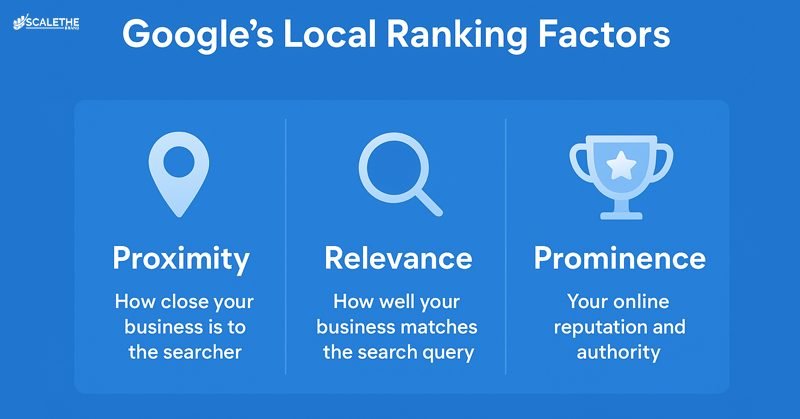
To succeed in Local SEO, it helps to know how search engines work. Google uses crawlers to index web pages and then ranks them based on proximity, relevance, and prominence.
● Proximity refers to how close your business is to the searcher
● Relevance measures how well your business matches the search intent.
● Prominence reflects your reputation and authority both online and offline.
Together, these factors decide whether your business makes it into the coveted local pack or gets buried below competitors.
How Local SEO Drives Customers to Your Business
When optimized properly, local SEO ensures that your business appears at the exact moment people are ready to buy. Whether it’s a restaurant search like “pizza near me” or a service query such as “plumber in Chicago,” strong local visibility builds trust and drives foot traffic, phone calls, and online conversions. For small and medium-sized businesses, this visibility is a powerful driver of growth.
Many small business owners assume they can’t compete because SEO is expensive. The truth is, affordable SEO services for small businesses now make it possible to optimize Google Business Profiles, manage citations, and build backlinks without breaking the bank.”
Getting Started with Local SEO
Every local firm has to build a solid foundation before pursuing more complex initiatives. The two most important tasks are setting up your Google Business Profile (GBP) and making sure NAP is consistent. By taking these steps, you enable search engines to better understand your company and facilitate clients’ access to accurate information about you.
Set Up Your Google Business Profile (GBP)
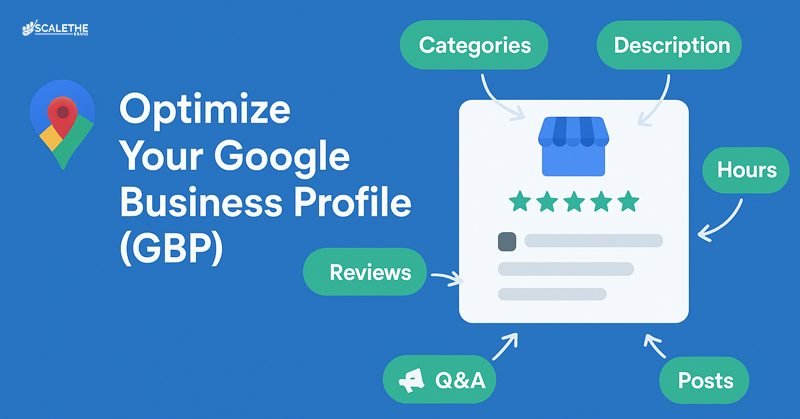
A well-optimized Google Business Profile is the cornerstone of local SEO. It not only gives your business visibility in Google Search and Maps but also serves as a digital storefront where potential customers can learn more about you.
Claim & Verify Your GBP
Start by claiming your profile through Google Business Profile Manager. Verification is essential; without it, you won’t be able to fully manage or update your listing.
Choose Primary & Secondary Categories
Selecting the right categories is crucial for relevance. Your primary category should reflect your core offering (e.g., “Coffee Shop”), while secondary categories can highlight additional services (e.g., “Bakery” or “Brunch Restaurant”).
Add Business Description, Hours & Services
Provide a clear business description that includes local keywords naturally. Keep your opening hours accurate, including holiday updates, to avoid customer frustration. Listing your services makes it easier for Google to match your business to relevant searches.
Upload Photos, Videos & Social Links
High-quality visuals boost trust and engagement. Add interior and exterior photos, product or service images, and short videos. Linking to your social profiles strengthens your online presence and brand authority.
Use Q&A & Google Posts Effectively
Don’t wait for customers to ask questions; proactively add common Q&As about your services. Regular Google Posts (offers, updates, events) keep your profile active and help you stay visible in searches.
Optimize NAP (Name, Address, Phone) Consistency
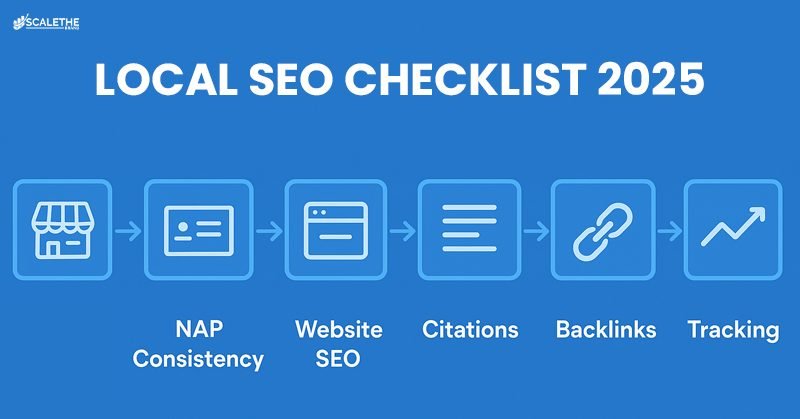
Your business’s Name, Address, and Phone number (NAP) must be consistent everywhere online. Even small variations (like “Street” vs. “St.”) can confuse search engines and reduce your visibility.
NAP on Website Footer & Location Pages
If you have a single location, include your NAP in the footer so it appears on every page. Multi-location businesses should create dedicated location pages with unique NAP details for each branch.
NAP Across Directories & Social Platforms
Ensure your NAP is identical across directories such as Yelp, TripAdvisor, and BBB, as well as on social platforms like Facebook and LinkedIn. Consistency builds Google’s trust in your business information, improving local rankings.
Website & On-Page SEO Essentials
Once your Google Business Profile and NAP details are set, the next step is to optimize your website. A well-structured, locally optimized website strengthens your visibility in search results and provides customers with the information they need.
Perform Local Keyword Research
If you’re unsure where to begin, learning how to do keyword research is the foundation. Local keyword research is the backbone of on-page SEO. By understanding the exact terms people use to search for businesses like yours, you can create pages that match their intent.
Tools (Google Search Console, Semrush, BrightLocal)
Start by analyzing data from Google Search Console to see what queries already bring traffic to your site. Then, use tools like Semrush and BrightLocal to find local search terms, compare competitors, and uncover “near me” opportunities.
Build Keyword Themes (Near Me, Geo-modifiers)
Instead of targeting a single keyword, group related terms into keyword themes. For example, “dentist in Chicago,” “Chicago dental clinic,” and “best dentist near me” all share the same intent. Using geo-modifiers (city names, neighborhoods) ensures your content matches local searches.
Optimize Core Web Pages
Your website is your digital storefront, and each page should serve a clear purpose. Optimizing key pages helps Google understand your offerings while guiding customers to take action.
Homepage Optimization
Your homepage should clearly state who you are, what you do, and where you are located. Include your primary keyword in the title tag, H1, and meta description, and make your business details visible above the fold.
Service Pages
If you offer multiple services, create a dedicated page for each. For example, a plumbing company might have separate pages for “Emergency Plumbing,” “Drain Cleaning,” and “Water Heater Repair.” Each page should target its keyword theme.
Location Pages
For businesses with multiple branches, build individual location pages with unique NAP details, local images, and directions. This helps you rank for location-specific searches while providing a better user experience.
Technical SEO & Site Health
A site that loads fast, is secure, and free of errors gives both users and search engines a reason to trust your business. Technical SEO ensures your site is performing at its best.
Core Web Vitals
Google uses Core Web Vitals to measure user experience. Focus on improving loading speed, interactivity, and visual stability across desktop and mobile.
XML Sitemap & Indexing
Submit an XML sitemap in Google Search Console to help search engines crawl and index your pages correctly. Regularly check for indexing issues that may prevent important pages from showing in search results.
Structured Data (Local Business Schema)
Implement Local Business schema markup on your website to provide search engines with structured details like your NAP, opening hours, and reviews. This increases your chances of appearing in rich results.
Fix Broken Links
Broken links frustrate users and signal poor maintenance to search engines. Use site audit tools to regularly find and fix broken links, ensuring a smooth browsing experience.
Building Local Authority
Search engines reward businesses that demonstrate authority and trustworthiness within their communities. Beyond optimizing your website, you need strong signals from citations, backlinks, and reviews to establish credibility and improve local rankings.
Local Citations
Citations are mentions of your business’s name, address, and phone number (NAP) across online directories. They act as trust signals for Google, helping confirm that your business is real and reliable.
Claim Major Directories (Yelp, TripAdvisor, BBB, Yellow Pages)
Start with the most trusted platforms. Claim and update your profiles on Yelp, TripAdvisor, Better Business Bureau (BBB), and Yellow Pages, as these carry strong authority and often rank highly in local searches.
Industry-Specific Directories
Beyond general directories, look for niche platforms. For example, lawyers should be on Avvo, doctors on Healthgrades, and restaurants on Zagat. These industry-focused citations help you reach the right audience.
Remove Duplicates & Ensure Consistency
Duplicate or inconsistent listings can harm your local SEO. Use tools like Citation Tracker or manual audits to clean up old or incorrect profiles, ensuring your NAP is consistent everywhere.
Local Backlinks
Backlinks from other local sites signal authority and trust to Google. The more high-quality local websites linking to you, the more credibility you gain in search results.
Sponsor Local Events or Charities
Community sponsorships are a win-win. By supporting local sports teams, events, or charities, you gain both visibility in your community and backlinks from their websites.
Collaborate with Local Bloggers & Media
Reach out to local journalists, influencers, or bloggers to feature your business. Media coverage and reviews on local blogs can drive both traffic and strong SEO signals.
Reclaim Unlinked Brand Mentions
Sometimes your business is mentioned online without a backlink. Use tools like Google Alerts or Ahrefs to track mentions, then politely ask the website owner to link to your site.
Online Reviews & Reputation Management
Reviews are a direct reflection of your business reputation and a major ranking factor in Google’s local algorithm. Consistent, positive reviews boost both trust and visibility.
Ask for Google & Platform-Specific Reviews
Encourage satisfied customers to leave reviews on Google Business Profile, Yelp, and other platforms that matter in your industry. The more high-quality reviews, the stronger your authority.
Respond to Reviews (Positive & Negative)
Always respond professionally to reviews. Thank happy customers and address negative feedback calmly; this shows potential clients that you value customer service.
Flag Fake Reviews
Fake reviews can damage your reputation. Report suspicious or malicious reviews on Google, Yelp, or other platforms to protect your brand’s credibility.
Tracking & Monitoring Results
Implementing local SEO strategies is only half the job; knowing whether they’re working is equally important. Tracking performance helps you measure ROI, identify gaps, and refine your approach. By using the right tools and monitoring the right KPIs, you can stay ahead of competitors and keep your business visible in local searches.
Tools for Local SEO Tracking
Modern SEO relies heavily on data. These tools provide insights into how your website and Google Business Profile are performing, ensuring you can make informed decisions.
Google Analytics 4 (GA4)
GA4 helps you understand where your visitors come from, how they interact with your site, and which pages lead to conversions. For local businesses, it’s invaluable for tracking user behavior from search to purchase.
Google Search Console
This free tool highlights how your website performs in Google Search. Use it to check indexed pages, keyword rankings, and any technical issues that could limit your visibility.
Map Rank Tracker & Citation Tracker
Specialized tools like Map Rank Tracker show how your business ranks in Google Maps for specific keywords and locations. Meanwhile, Citation Tracker monitors the accuracy and consistency of your NAP across directories.
BrightLocal Local Search Audit
BrightLocal’s audit tool reviews hundreds of factors like backlinks, citations, and on-page SEO to give you a clear picture of what’s working and what needs attention in your local SEO strategy.
Key Local SEO KPIs(Key Performance Indicators)
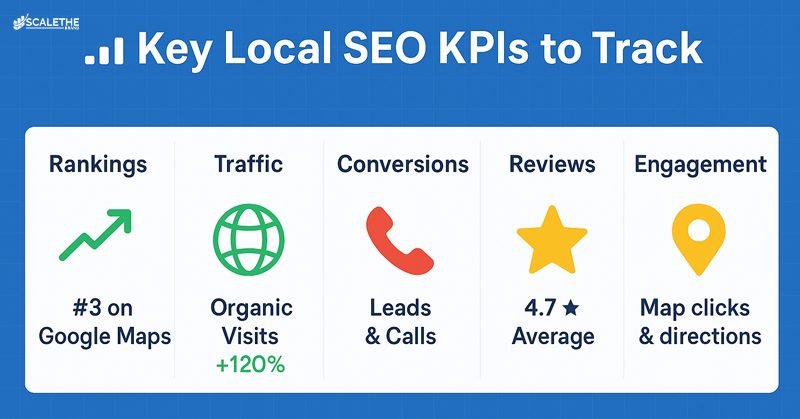
Metrics are the pulse of your local SEO campaign. Tracking the right KPIs ensures you know whether your efforts are driving real business growth.
Rankings, Traffic & Conversions
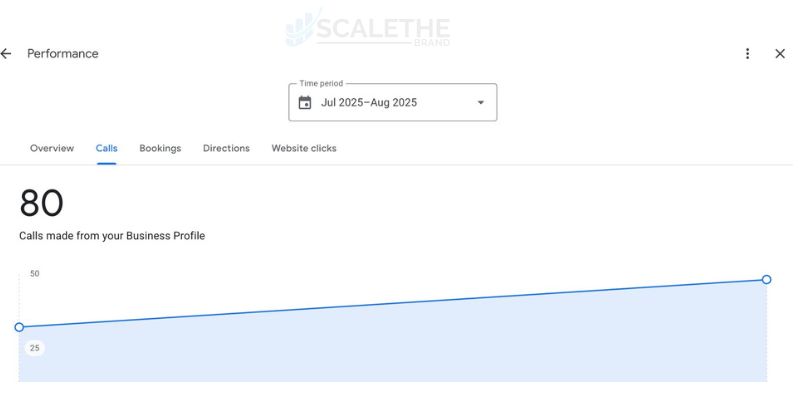
Monitor keyword rankings, but don’t stop there. Track organic traffic from local searches and, most importantly, conversions such as form fills, calls, or in-store visits that prove your SEO is paying off.
Review Scores & Engagement Metrics
Reviews influence both rankings and customer trust. Keep an eye on your average star rating, review volume, and how quickly you respond. Engagement metrics like click-to-call, direction requests, and post interactions in GBP also reveal how customers are connecting with your business.
Future-Proofing Your Local SEO
Local SEO is always changing due to shifts in Google’s algorithms, technology, and customer behavior. Instead of depending just on current tactics, firms must adjust to new trends in order to remain competitive. No matter how the digital world changes, future-proofing your local SEO guarantees that your company will continue to draw clients.
Embrace Video & Social SEO (YouTube, TikTok, Instagram)
One of the fastest-growing ways consumers find local businesses is through video content. Products, services, and behind-the-scenes tales may be effectively showcased on websites like YouTube, TikTok, and Instagram Reels. In addition to increasing your exposure in Google’s video search results, short, interesting movies help you gain the confidence of potential clients. Video SEO is a direct way for local companies to increase brand loyalty and community involvement.
AI & Automation in Review & Citation Management
Artificial intelligence is transforming how businesses handle repetitive SEO tasks. Tools now use AI to draft review responses, monitor online mentions, and automatically update business listings across multiple directories. Automation ensures your information stays consistent while saving time, making it easier to focus on strategic growth. By adopting AI-driven solutions early, you can maintain a polished, professional online presence without overwhelming manual effort.
There’s a growing debate around whether AI content works for SEO. While AI can streamline tasks like citation management or generating review responses, human oversight is still needed for authenticity and brand voice.”
Staying Updated with Google’s Local Search Algorithm
Google updates its local search algorithm regularly, impacting how businesses appear in Maps and local packs. Staying updated with these changes, through trusted SEO blogs, newsletters, or webinars, prevents sudden drops in visibility. Even small tweaks, like Google’s emphasis on mobile-first indexing or Core Web Vitals, can shift rankings. Businesses that monitor updates and adapt quickly will continue to dominate local search results while competitors lag behind.
Final Thoughts of Local SEO Checklist for 2025
Google Business Profile optimization, NAP consistency, local citations, backlinks, and reviews are the cornerstones of local SEO in 2025. These components increase client trust in addition to improving rankings. Businesses must dedicate themselves to ongoing monitoring and updating, measuring performance, and adjusting to algorithm changes if they want to prosper in the long run. Your company can remain ahead of the competition, dominate local search, and draw in new clients with persistent work.
Frequently Asked Questions
Here are some answers to common questions
Do small businesses really need Local SEO?
Yes, 81% of consumers search online before making a local purchase. Without Local SEO, small businesses miss out on high-intent customers ready to purchase.
How do I track the success of my Local SEO?
You can measure success using tools like Google Analytics 4, Google Search Console, BrightLocal, and Semrush Local to track rankings, traffic, conversions, and review performance.
Can social media help with Local SEO?
While social media signals don’t directly affect rankings, platforms like Instagram, TikTok, and Facebook drive local brand awareness and can generate backlinks and customer engagement.
How do reviews impact Local SEO rankings?
Reviews are critical; Google uses both review volume and star ratings as ranking factors. Responding to reviews also improves credibility and engagement.
How long does it take to see results from Local SEO?
Most businesses start noticing improvements within 3–6 months, depending on competition, consistency of NAP data, and backlink strength.
How much does Local SEO cost for small businesses?
Costs vary widely from $300 to $2,000 per month, depending on whether you do it yourself, hire a freelancer, or work with a professional agency.
Does Google Business Profile really help with SEO?
Yes. An optimized Google Business Profile (GBP) is one of the strongest ranking signals for local search and directly impacts your visibility in Maps and the Local Pack.