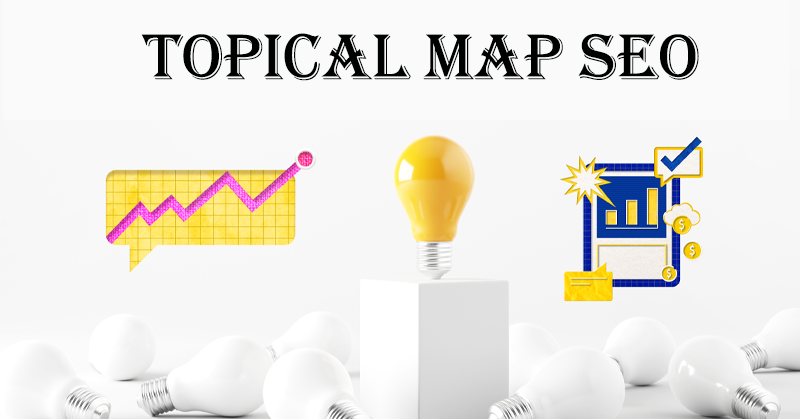
Search engines no longer rank individual pages in isolation. Instead, they evaluate how well an entire website understands, covers, and connects a topic. This shift has given rise to Topical Map SEO, a strategic framework that organizes content based on topical relevance, semantic relationships, and user intent rather than isolated keywords.
Topical Map SEO is the foundation behind modern content dominance. Websites that win today do not simply publish more articles; they publish structured knowledge ecosystems that search engines recognize as authoritative. This guide explores what topical map SEO is, why it matters, how it works, and how to implement it step by step to build sustainable rankings.
What Is Topical Map SEO?
Topical Map SEO is the process of planning, structuring, and publishing content around an entire topic, broken down into logically connected subtopics, entities, and user intents.
A topical map acts like a blueprint of subject matter expertise. It defines:
- The main topic
- All subtopics and microtopics
- The relationships between them
- The order in which content should be created
- The internal linking structure
Rather than targeting single keywords, topical map SEO targets topic coverage completeness. Search engines use semantic understanding, entity recognition, and contextual relevance to determine whether a site demonstrates genuine expertise. A well-built topical map aligns perfectly with this evaluation model. But if you are unaware of seo then first read our in depth guide on What is SEO?
Why Topical Map SEO Matters in Modern Search
Search Engines Think in Topics, Not Keywords
Modern algorithms rely on:
- Natural language processing
- Entity relationships
- Knowledge graphs
- Contextual signals
When someone searches, Google does not look for an exact keyword match. It looks for the best source that fully answers the topic. Topical map SEO ensures your website becomes that source.
Topical Authority Is a Ranking Multiplier
Topical authority occurs when a site consistently covers a subject deeply and comprehensively. Once established, it creates compounding benefits:
- Faster ranking for new pages
- Lower dependence on backlinks
- Stronger trust signals
- Increased crawl priority
- Higher engagement metrics
Topical maps are how topical authority is engineered, not guessed.
It Prevents Content Cannibalization
Without a topical map, websites often publish overlapping content:
- Multiple pages targeting the same intent
- Conflicting angles on similar queries
- Weak internal linking logic
Topical maps prevent this by assigning one clear purpose per page, ensuring each piece strengthens the others.
Core Components of a Topical Map
Core Topic (Topical Root)
The core topic is the primary subject your website or section aims to dominate.
Examples:
- Search Engine Optimization
- Murree Travel Guide
- English Grammar
- Pest Control
The core topic should be:
- Broad enough to support many subtopics
- Narrow enough to remain focused
- Aligned with your site’s long-term goals
Subtopics (Topical Branches)
Subtopics break the main topic into major thematic areas. For SEO, subtopics might include:
- On-page optimization
- Technical SEO
- Content strategy
- Local SEO
- Link building
Each subtopic represents a cluster that deserves multiple supporting pages.
Microtopics (Topical Leaves)
Microtopics address specific questions, problems, or concepts within each subtopic.
Examples:
- Title tag optimization
- Canonical URLs
- Keyword intent types
- Internal linking strategies
These pages often target:
- Long-tail searches
- Informational intent
- Problem-solving queries
Microtopics are where topical depth is built.
Entities and Semantic Relationships
Entities are people, places, concepts, tools, and processes that define a topic. Search engines expect authoritative content to naturally reference:
- Related concepts
- Supporting terminology
- Contextual signals
A topical map ensures entities appear consistently and logically across content, reinforcing subject understanding.
Search Intent Alignment
Every page in a topical map serves a distinct intent, such as:
- Informational
- Navigational
- Commercial
- Transactional
Mapping intent prevents overlap and improves relevance signals.
How Topical Map SEO Works Step by Step
Step 1: Define the Topic Boundary
The most critical step is deciding what your site will and will not cover.
Clear boundaries help search engines classify your site’s expertise.
Ask:
- What problems does this topic solve?
- Who is the audience?
- What related topics are intentionally excluded?
Strong topical boundaries increase clarity and trust.
Step 2: Perform Topical Research (Not Keyword Research)
Traditional keyword research focuses on volume. Topical research focuses on coverage completeness.
Methods include:
- Analyzing search result patterns
- Studying related questions
- Mapping entity relationships
- Understanding beginner-to-advanced learning paths
The goal is to identify every meaningful subtopic needed to fully explain the main subject. Also read our guide to How to do Keyword Research?
Step 3: Build the Topical Hierarchy
Organize topics into a structured hierarchy:
- Core topic
- Subtopic
- Microtopic
- Supporting questions
- Microtopic
- Subtopic
This hierarchy determines:
- URL structure
- Internal linking logic
- Content creation order
Search engines prefer clear topical progression.
Step 4: Assign One Intent per Page
Each page should:
- Target one primary intent
- Solve one main problem
- Avoid competing with sibling pages
For example:
- One page explains a concept
- Another page compares tools
- Another page provides a step-by-step guide
Intent clarity strengthens relevance.
Step 5: Create Content in Logical Order
Topical map SEO favors bottom-up growth.
Start with:
- Foundational concepts
- Core explanations
- Supporting microtopics
- Advanced strategies
This mirrors how humans learn and how search engines evaluate expertise.
Internal Linking in Topical Map SEO
Internal links are the circulatory system of a topical map.
Strategic Internal Linking Principles
There are given some common link building strategies:
- Parent pages link to child pages
- Child pages link back to parents
- Sibling pages cross-link naturally
- Anchor text reflects topical relevance, not keyword stuffing
This creates:
- Clear topical clusters
- Strong content relationships
- Improved crawl efficiency
Topical Flow Matters More Than Link Quantity
Search engines evaluate:
- Where a link appears
- How relevant the linked page is
- Whether the link supports topic understanding
A smaller number of highly relevant internal links is more powerful than excessive linking.
Content Depth vs Content Length
Topical map SEO is often associated with long content, but depth is more important than word count.
Depth includes:
- Clear explanations
- Complete coverage
- Practical examples
- Logical structure
- Entity inclusion
A short page can still support topical authority if it fulfills a specific role within the map.
Topical Maps vs Traditional Content Clusters
Topical maps are future-proof, while keyword clusters often degrade over time.
How Search Engines Evaluate Topical Maps
Search engines assess topical strength through:
- Consistent terminology usage
- Coverage breadth and depth
- Internal link patterns
- Content freshness
- Engagement signals
- Query satisfaction
When multiple pages reinforce the same subject from different angles, search engines infer expertise.
Common Topical Map SEO Mistakes
Publishing Without a Map
Random content creation leads to:
- Weak topical signals
- Internal competition
- Poor crawl prioritization
Every page should have a defined role.
Overlapping Page Purposes
Two pages answering the same question dilute authority.
Each page must have:
- A unique angle
- A unique intent
- A unique position in the map
Ignoring Microtopics
Many sites stop at surface-level coverage. True topical authority comes from addressing specific, nuanced questions. Microtopics separate average sites from dominant ones.
Focusing on Tools Instead of Concepts
Tools change. Concepts last. Topical maps should prioritize:
- Principles
- Frameworks
- Processes
- Explanations
Tools support authority but should not define it.
Measuring Success of Topical Map SEO
Key indicators include:
- Increased impressions across related queries
- Faster indexing of new content
- Ranking improvements without backlinks
- Growth in long-tail traffic
- Stronger internal page rankings
Success is measured at the topic level, not page by page.
Topical Map SEO and Long-Term Growth
Topical maps create momentum. Once a topic is established:
- New pages rank faster
- Existing pages reinforce each other
- Authority compounds over time
This is why older authoritative sites maintain dominance with less effort.
Topical Map SEO for Different Website Types
Blogs and Content Sites
- Focus on informational completeness
- Build learning-based hierarchies
- Answer questions progressively
Business Websites
- Map services, problems, and solutions
- Align content with customer journeys
- Support commercial pages with informational depth
Niche Authority Sites
- Define strict topical boundaries
- Cover every angle exhaustively
- Avoid unrelated content entirely
The Future of Topical Map SEO
As search engines evolve:
- Entity understanding will deepen
- Contextual relevance will outweigh exact matches
- Authority signals will favor structured knowledge
Topical map SEO aligns with these trends naturally. Websites built on topical maps are not chasing algorithms, they are aligning with how search engines understand knowledge itself.
Final Thoughts
Topical Map SEO is not a tactic. It is a content philosophy. It shifts the focus from:
- Keywords to concepts
- Pages to ecosystems
- Traffic spikes to authority growth
By planning content as a structured, interconnected body of knowledge, you build trust with both users and search engines.nWebsites that master topical map SEO do not compete page by page. They dominate topics.
Frequently Asked Questions
Here are some answers to common questions
What is a topical map in SEO?
A topical map in SEO is a structured plan that organizes content around a main topic and its related subtopics, microtopics, and entities. It helps search engines understand a website’s subject matter expertise by showing clear topical relationships and complete coverage instead of isolated keyword targeting.
How does topical map SEO help with rankings?
Topical map SEO improves rankings by building topical authority. When a website covers a topic comprehensively with logically connected content and strong internal linking, search engines trust it more, index pages faster, and rank both new and existing content higher across related queries.
Is topical map SEO better than keyword-based SEO?
Yes, topical map SEO is more effective long term than keyword-based SEO because search engines rank based on topic relevance and context rather than exact keyword matches. Keyword research supports topical maps, but authority is built through complete topic coverage, entity usage, and intent alignment.