Growing your website might feel like climbing an endless hill in the fast-paced world of digital marketing today. Even if you spend hours creating excellent content, your Google rankings seem to be stagnant and the traffic hardly changes.
In the meantime, your efforts seem to be overshadowed by rivals who seem to get to the top with ease. You’re not alone if, despite your best efforts, it seems like your website is invisible.
But before applying SEO link building techniques and strategies – best practice for off-page, it’s important to step back and understand the basics of what is SEO, how do search engines work, and how to do keyword research effectively.” The missing piece? Effective link building. Without a strong backlink strategy, even the most valuable content can struggle to gain the visibility it deserves.
The good news is, there’s a proven way to fix this, and it’s far simpler than you might think.
What is Link Building?
Link building is the practice of earning hyperlinks from other websites that direct users to your own. For small brands, especially those exploring affordable SEO services for small businesses, link building is often the most cost-effective way to compete with bigger players. Think of these links as digital “votes of trust” signals to search engines like Google that your content is valuable, credible, and worth ranking higher.
High-quality backlinks from respectable, authoritative websites may significantly raise the exposure and search ranks of your website.
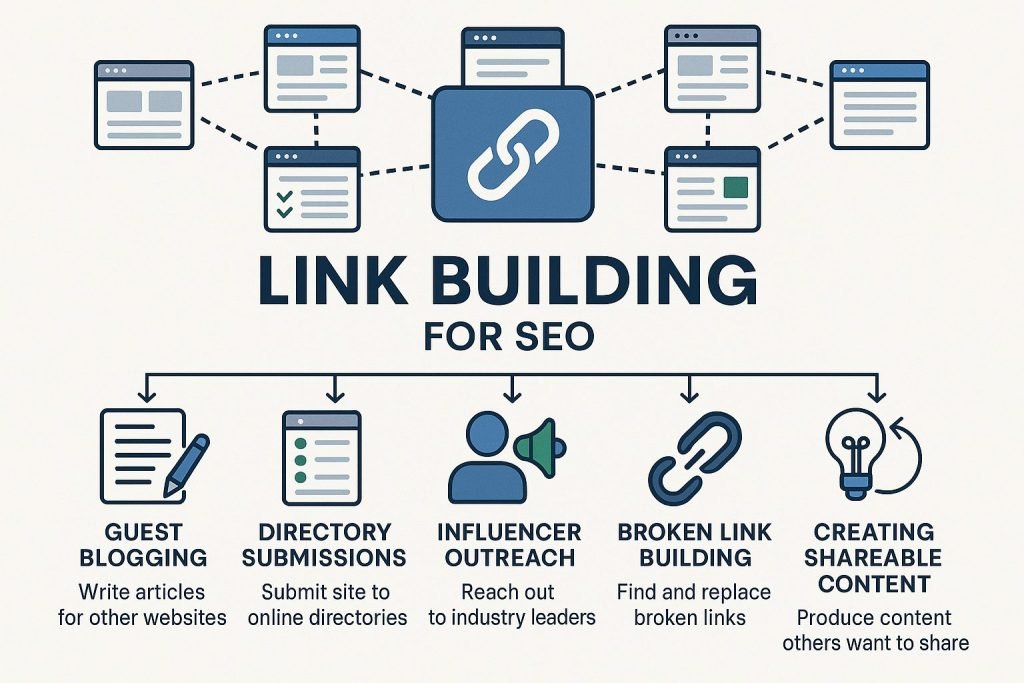
Guest blogging, creating highly shareable material, working with influencers, and taking advantage of broken link development chances are some common link-building techniques. Your chances of landing the top places in Google search results increase with the number of relevant, high-authority links you get.
Why Link Building Still Matters for SEO (Even After All the Updates)
In the ever-changing landscape of SEO, one thing hasn’t changed: link building is still a powerhouse strategy. Even after countless Google algorithm updates, backlinks remain one of the strongest ranking signals. High-quality, relevant links continue to tell search engines that your content is trustworthy, authoritative, and worth ranking.
Earning quality backlinks does more than just improve rankings; it boosts your site’s credibility, drives targeted organic traffic, and strengthens your brand’s online reputation. With Google’s ongoing focus on E-A-T (Expertise, Authoritativeness, Trustworthiness), links from respected, authoritative sources are now more valuable than ever.
Many marketers also wonder: does AI content work for SEO? The truth is that AI can assist with scale and ideation, but backlinks and human-edited quality content remain the backbone of lasting SEO success.”
Foundations of Link Building
Backlinks are links leading to your website from other websites; they serve as strong recommendations for your content. They are among the best signs for raising the authority and search engine rankings of your website. However, not every backlink is made equally. Relevance, authority, and trust are the three main pillars that support a backlink profile’s strength. This is also the reason that discussions over guest pieces versus specialty editing are common in SEO circles.
These two methods can work, but only when the backlinks come from authoritative, relevant sources.”Links from websites in your niche (relevance), established industry leaders (authority), and credible, reputable sources (trust) tell Google your content is valuable and reliable. In link building, it’s always quality over quantity; a few high-authority backlinks can outperform hundreds of low-quality ones.
Understanding Different Types of Links
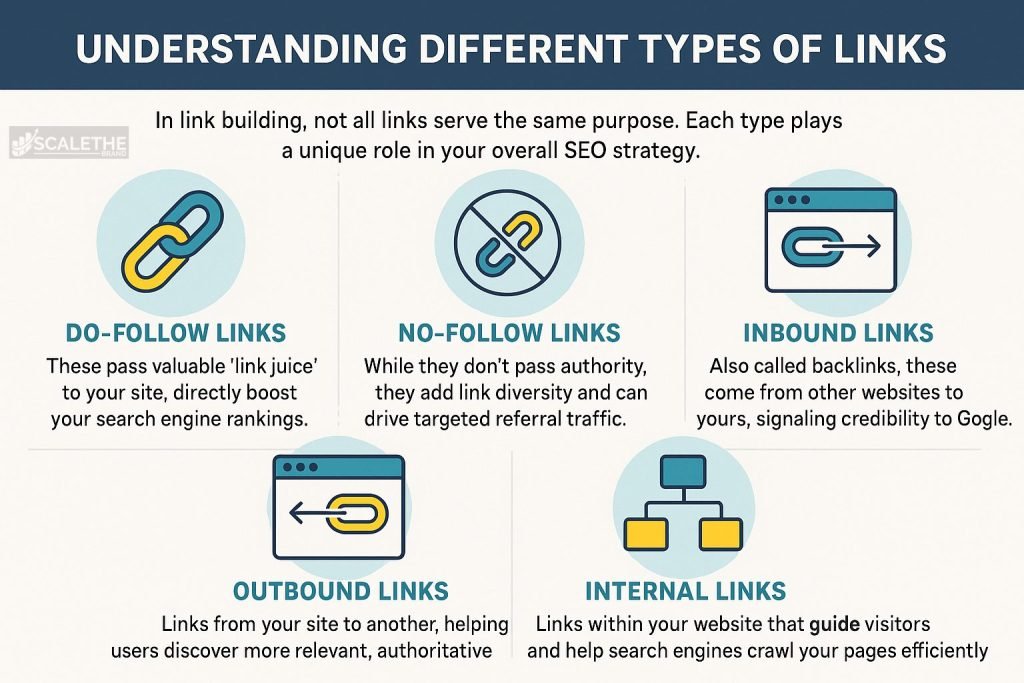
In link building, not all links serve the same purpose. Each type plays a unique role in your overall SEO strategy:
- Do-Follow Links: These pass valuable “link juice” to your site, directly boosting your search engine rankings.
- No-Follow Links: While they don’t pass authority, they add link diversity and can drive targeted referral traffic.
- Inbound Links: Also called backlinks, these come from other websites to yours, signaling credibility to Google.
- Outbound Links: Links from your site to another, helping users discover more relevant, authoritative resources.
- Internal Links: Links within your website that guide visitors and help search engines crawl your pages efficiently.
Link Attributes that Impact SEO
Not all backlinks are treated equally by search engines. Modern SEO recognizes special link attributes that tell Google how to interpret a link:
- rel=”nofollow”: Signals to search engines not to pass ranking authority, helping maintain a natural link profile.
- rel=”sponsored”: Marks links that are part of paid promotions or sponsored content.
- rel=”ugc”: Stands for User-Generated Content, often used for links in forums, blog comments, or community platforms.
Using the right attributes ensures your link-building strategy remains transparent, compliant with Google’s guidelines, and effective in boosting rankings.
Link Building Techniques That Actually Work
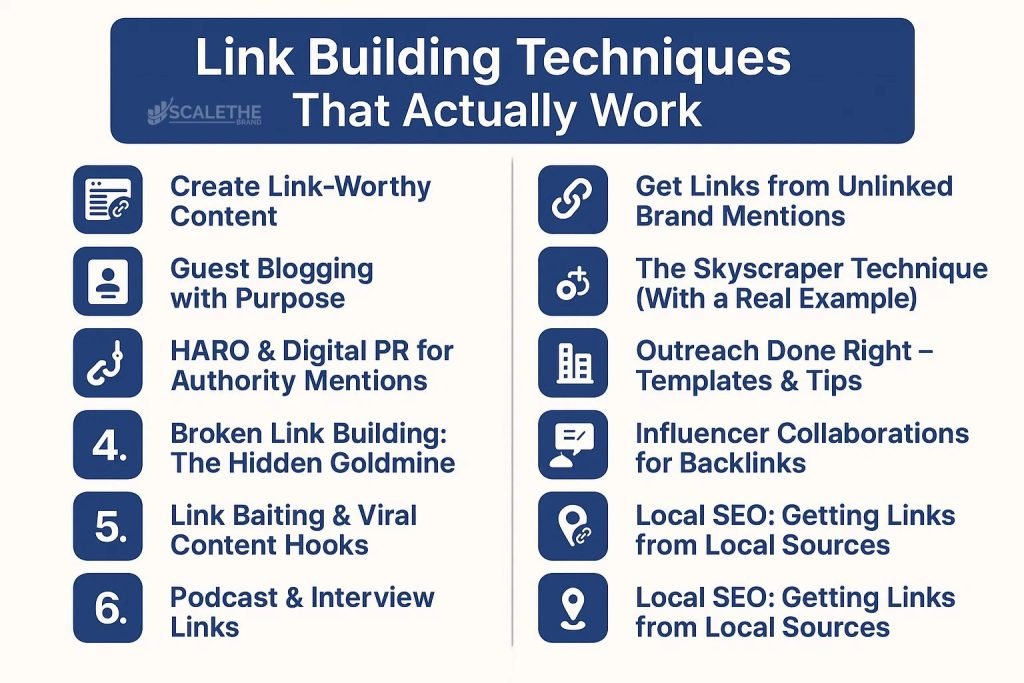
Here are 11 proven link-building strategies to earn high-quality backlinks in 2025, without shady tricks or keyword stuffing.
1. Create Link-Worthy Content
Build linkable assets; content so valuable that people naturally want to reference it. Examples include:
- Data-driven studies
- Eye-catching infographics
- In-depth long-form guides
- Detailed case studies
2. Guest Blogging with Purpose
Guest posting isn’t dead; it just needs a smarter approach. It also teaches you how to write an article in a way that adds real value while naturally incorporating backlinks.” Pitch unique, well-researched ideas to high-authority websites in your niche, and include natural, contextual links to your best content.
3. HARO & Digital PR for Authority Mentions
Use Help a Reporter Out (HARO) and digital PR to get quoted in reputable publications. Journalists and bloggers are constantly seeking credible sources; position yourself as one.
4. Broken Link Building: The Hidden Goldmine
Spot broken links on other sites, create similar or better content, and suggest replacing the dead link with yours. Tools like Ahrefs and SEMrush make this process easier.
5. Link Baiting & Viral Content Hooks
Publish content with emotional or practical appeal to attract shares and backlinks, such as:
- Debunking industry myths
- Controversial yet well-supported opinions
- Free tools, calculators, or templates
6. Podcast & Interview Links
Appear on niche podcasts or industry interviews to gain natural backlinks from show notes and press pages, while building your brand authority.
7. Get Links from Unlinked Brand Mentions
Sometimes your brand gets mentioned online, but without a backlink. Use tools like Google Alerts or Ahrefs’ Content Explorer to track these unlinked brand mentions. Then, reach out politely and request the site owner to add a clickable link to your page; it’s one of the easiest link-building wins.
8. The Skyscraper Technique (With a Real Example)
Find high-performing content in your niche, create an even better version, and pitch it to the same websites that linked to the original. This combines content marketing and outreach for powerful results.
Example: If a blog ranks for “10 SEO Audit Tools,” create “25 Free SEO Audit Tools with Tutorials” and share it with those same linkers.
9. Outreach Done Right – Templates & Tips
Email outreach still works for backlink building, if it’s done well. Keep it:
- Personalized
- Short & to the point
- Mutually beneficial
Avoid mass, generic emails. Show you’ve read their work and explain exactly how your resource adds value.
Pro tip: “Hey [Name], I loved your article on [Topic]. I just created something that builds on that, happy to share if you think it’s useful.”
10. Influencer Collaborations for Backlinks
Partner with industry influencers to create co-branded content, expert roundups, or testimonials. When they share and link back, you earn both authority backlinks and referral traffic.
11. Local SEO: Getting Links from Local Sources
If you run a local business, tap into geo-specific SEO backlinks through:
- Chamber of commerce listings
- Local business directories
- Local news features
- Community sponsorships
These links not only strengthen local search rankings but can also increase foot traffic to your business.
Tools & Templates for Smarter Link Building
A strong link-building strategy isn’t just about finding opportunities; it’s also about tracking progress and executing effective outreach. Here are some of the best tools and a ready-to-use template to help you earn high-quality backlinks.
Best Tools for Tracking Your Link Profile
Ahrefs
Ideal for competitor backlink analysis, finding broken link opportunities, and monitoring new links.
SEMrush
Tracks link growth, identifies toxic backlinks, and provides detailed SEO insights.
MOZ
Measures domain authority, spam scores, and link quality.
Google Search Console
A free tool to track backlinks, monitor indexing, and analyze search performance.
Free Outreach Email Template
Hi [Name],
I came across your post on [Topic] and found it super insightful.
I recently created a [guide/tool/resource] that expands on the topic—might be a great addition for your readers?
Either way, big fan of your work!
Best,
[Your Name]
Avoid These Common Link Building Mistakes
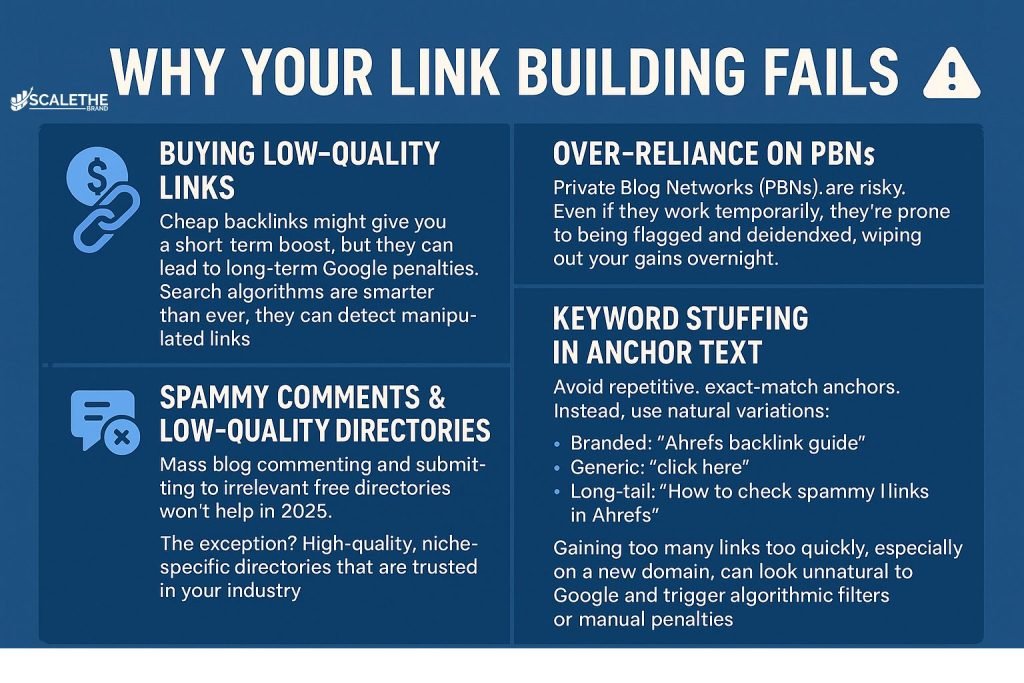
Even the best link-building strategies can fail if you fall into these all-too-common traps:
1. Buying Low-Quality Links
Cheap backlinks might give you a short-term boost, but they can lead to long-term Google penalties. Search algorithms are smarter than ever; they can detect manipulated links.
2. Over-Reliance on PBNs
Private Blog Networks (PBNs) are risky. Even if they work temporarily, they’re prone to being flagged and deindexed, wiping out your gains overnight.
3. Spammy Comments & Low-Quality Directories
Mass blog commenting and submitting to irrelevant free directories won’t help in 2025. The exception? High-quality, niche-specific directories that are trusted in your industry.
4. Keyword Stuffing in Anchor Text
Avoid repetitive, exact-match anchors. Instead, use natural variations:
- Branded: “Ahrefs backlink guide”
- Generic: “click here”
- Long-tail: “How to check spammy links in Ahrefs”
5. Ignoring Link Diversity & Link Velocity
A healthy backlink profile mixes:
- Varied sources (blogs, news, forums)
- Different anchor texts
- Steady growth over time (link velocity)
Gaining too many links too quickly, especially on a new domain, can look unnatural to Google and trigger algorithmic filters or manual penalties.
The Safer, Smarter Approach
Aim for consistent, organic growth:
- Weeks 1–2: Outreach to niche blogs and forums
- Week 3: Secure a few guest post links
- Week 4: Earn unlinked brand mentions or citations
Also diversify link types, contextual links in blog posts, author bios, niche directories, infographic backlinks, podcast mentions, and resource page placements.
How to Measure Link Building ROI
Link building requires time, effort, and resources, so it’s crucial to know if your strategy is delivering results. Here are the key SEO metrics to track:
- Organic traffic growth to the pages that have acquired new backlinks
- Keyword ranking improvements in Google and other search engines
- Increase in referring domains (track with tools like Ahrefs, SEMrush, or Moz)
- Conversion rate from referral traffic generated by those backlinks
- Growth in Domain Rating (DR) and Page Authority (PA) over time
Pro Tip: In Google Analytics, set up custom goals to measure not just traffic, but conversions from specific backlinks. This way, you can directly see which links are driving real business results, not just clicks.
Diversifying Anchor Text & Referring Domains
Anchor text plays a quiet but powerful role in shaping your backlink profile. Using the same exact-match keyword repeatedly can signal manipulation to search engines, and that’s a risk you don’t want.
Instead, aim for a balanced mix:
- Branded: “Scalethebrand”
- Generic: “click here”, “read more”
- Long-tail: “learn how to create linkable assets”
- Partial match: “best SEO link building strategies”
Equally important is diversifying your referring domains. Building backlinks from a variety of reputable sources, rather than relying on the same few, creates a more natural, authority-driven SEO footprint that search engines trust.
How to Keep Your Backlink Profile Healthy for the Long Run
Building high-quality backlinks is just the start; maintaining a natural backlink profile is where true SEO pros shine. Here’s how to stay ahead:
- Use tools like Moz or Ahrefs to track and recover lost backlinks.
- Regularly disavow toxic or spammy links in Google Search Console to protect your site’s trustworthiness.
- Keep your top-linked pages fresh by updating content so it stays valuable and relevant.
- Reclaim broken or lost links with a quick, friendly outreach email.
A clean, well-maintained backlink profile not only strengthens your search engine rankings but also shields your site from potential Google penalties.
Automating Link Prospecting with AI Tools
Manually hunting for backlink opportunities can drain hours from your day, but AI link-building tools make it faster and smarter.
Top picks for automation:
- Snov.io / Instantly.ai: streamline email outreach automation
- SurferSEO / Frase: optimize content for linkability and higher rankings
- ChatGPT: craft personalized outreach messages in seconds
- BuzzSumo: uncover trending topics and influencers worth pitching
Let AI handle the repetitive prospecting work, so you can focus on building high-quality backlinks and genuine industry relationships.
Final Thoughts of Link Building Techniques and Strategies
In 2025, link building strategies are more on producing genuine, long-lasting content that organically draws backlinks than they are about chasing immediate victories or manipulating search engine algorithms. Websites that obtain backlinks through genuine outreach and relevant, high-quality content often outperform those looking for shortcuts as Google’s algorithms become more sophisticated. The core of contemporary link building is straightforward: provide material and resources that people actually want to reference and share, whether through guest posting, digital PR, or creating link-worthy products.
You’re creating more than just backlinks when you deliberately employ these link-building strategies by focusing on user experience, diversifying your anchor text, and focusing on high-authority sites. Instead, you’re creating an SEO foundation that will last for years. When combined with frequent backlink audits and constant performance tracking, these tactics not only improve your search engine ranks but also generate steady, high-quality traffic that increases brand awareness, builds domain authority, and promotes long-term growth.
Frequently Asked Questions
Here are some answers to common questions
How long does it take for link-building strategies to deliver results?
Most websites start noticing SEO improvements within 1–3 months, depending on their industry niche, competition level, and the authority of backlinks earned.
Do NoFollow backlinks help SEO?
Absolutely. While they may not directly pass PageRank, NoFollow links still boost referral traffic, strengthen your link profile diversity, and can open doors to DoFollow link opportunities.
Can I achieve Google rankings without backlinks?
For low-competition keywords, yes, but for long-term growth and competing in high-competition SERPs, quality backlinks are a core ranking factor.
What’s the most Google-safe way to build backlinks?
Stick to white-hat link-building techniques like creating share-worthy content, guest posting on relevant blogs, and organic outreach. Avoid paid link schemes that could trigger penalties.
How many backlinks are enough to rank?
There’s no fixed number. Instead, aim for consistent backlink growth from relevant, high-authority websites that align with your content strategy.